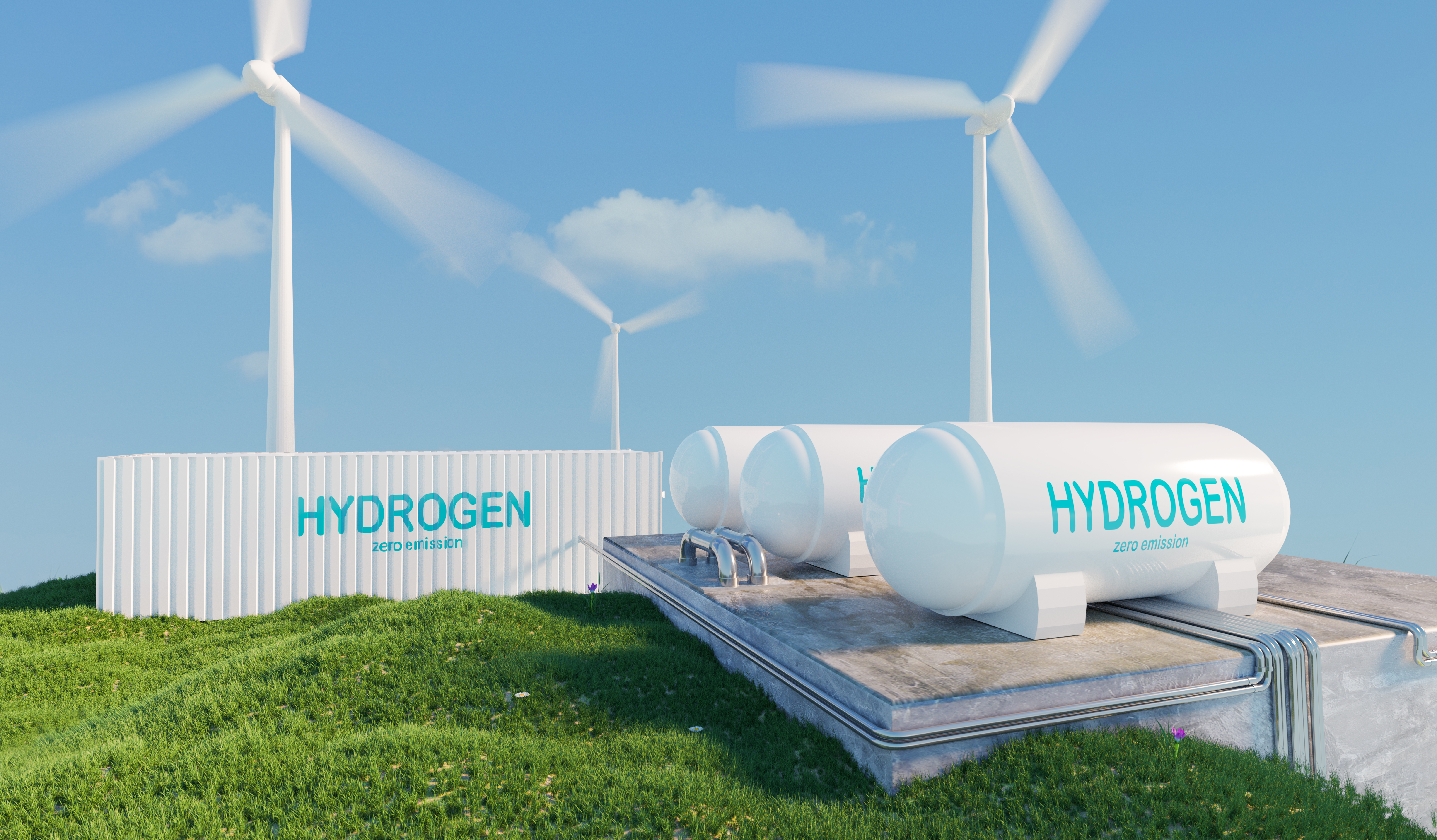
Green hydrogen decarbonizes industrial power by fueling hydrogen-ready gas turbines and enabling long-duration energy storage, but its role today is defined as much by engineering integration and cost as by ambition. It matters because most operators will not build hydrogen plants from scratch; they will retrofit existing turbines and integrate hydrogen into running operations.
This guide covers what a hydrogen-ready turbine is, how much hydrogen today's turbines can actually burn, how to integrate hydrogen into an existing plant, what green hydrogen honestly costs in 2026, the standards that govern it, and how an EPC and O&M partner delivers a hydrogen power project. It is written for plant owners, project developers, and reliability and procurement leaders evaluating a real hydrogen transition.
Prismecs integrates green hydrogen into industrial power through EPC, owner's engineering, O&M, and distributed energy services. Prismecs does not produce hydrogen or manufacture turbines; it engineers, installs, commissions, and maintains the power systems that run on it.
What a Hydrogen-Ready Turbine Actually Is
A hydrogen-ready turbine is a gas turbine designed or upgraded to burn hydrogen, either blended with natural gas or eventually as 100% hydrogen, without a full replacement of the machine. The term signals a defined upgrade path, not an immediate switch, because hydrogen combustion differs sharply from natural gas.
Today's fleet capability is partial but real. According to Global Energy Monitor data, roughly 47% of turbines in gas plants under construction, about 82 GW, are capable of blending 50% hydrogen. GE Vernova's HA-class already burns up to 50% hydrogen by volume with its DLN 2.6e combustion system, with a stated pathway to 100%.
The distinction matters for planning. A turbine rated for a 30% or 50% hydrogen blend delivers a partial emissions cut now, while 100% hydrogen capability across major frames is largely on OEM roadmaps to 2028 to 2030. Buying or retrofitting means matching today's blend capability to a realistic hydrogen supply.
How Much Hydrogen Can Today's Turbines Burn
Most major turbine OEMs now offer machines capable of at least 30% hydrogen blending, with 100% hydrogen either demonstrated or on a firm roadmap to 2030. The exact capability depends on the frame, the combustion system, and whether the unit is new or a retrofit.
The current OEM landscape for hydrogen-capable turbines:
Older diffusion-flame frames like the 7F and 6B can already run high hydrogen blends, but at higher NOx that may require additional emissions control. The right path depends on the existing asset, the hydrogen available, and the site's emissions permit, which is why turbine selection is an engineering decision, not a catalog pick.
The Engineering Challenges of Hydrogen Combustion
Hydrogen combustion introduces real engineering challenges that make integration, not the fuel itself, the hard part. Hydrogen burns very differently from natural gas, and ignoring those differences risks equipment damage and emissions non-compliance.
The core combustion challenges:
- High flame speed: hydrogen's flame speed is roughly eight times that of natural gas, raising the risk of flashback into the combustor.
- Higher flame temperature: Higher flame temperature: hydrogen's higher adiabatic flame temperature can raise NOx emissions unless combustion is managed with advanced systems.
- Lower volumetric energy density: hydrogen carries less energy per unit volume, changing fuel delivery and control requirements.
- Material and safety considerations: hydrogen's small molecule and embrittlement risk demand appropriate piping, seals, and detection.
OEMs address these with Dry Low NOx (DLN) and Dry Low Emissions (DLE) combustion systems, micromixer premixers, and sequential combustion. GE Vernova's validated 100% hydrogen DLN system demonstrated dry NOx below 25 ppm, showing the challenges are solvable with the right combustion technology and integration engineering.
How to Integrate Hydrogen Into an Existing Power Plant
Integrating hydrogen into an existing power plant is an engineering and balance-of-plant project, not a fuel swap, requiring combustion assessment, fuel-system modification, safety systems, and commissioning. The turbine is only one part; the surrounding plant must be made hydrogen-ready too.
The core integration workstreams:
- Turbine assessment and upgrade: confirming the frame's blend capability and specifying combustion-system upgrades where needed.
- Fuel delivery and blending: hydrogen supply, blending skids, piping, and controls sized to the target blend ratio.
- Safety and detection: leak detection, ventilation, and fire and gas systems designed to hydrogen codes.
- Balance of plant: modifications to seals, valves, and instrumentation compatible with hydrogen.
- Commissioning and O&M: safe start-up, performance validation, and a maintenance program for hydrogen operation.
This is where an EPC and owner's-engineering partner is decisive. Coordinating turbine OEM capability, fuel supply, safety compliance, and commissioning into one project is the work that turns hydrogen from a concept into dispatchable power, and it is where a turnkey integrator adds the most value.
What Green Hydrogen Honestly Costs in 2026
Green hydrogen remains significantly more expensive than conventional fuels in 2026, with unsubsidized production costs commonly cited between USD 2.50 and USD 7.00 per kilogram. This cost gap, not the technology, is the main barrier to large-scale industrial adoption today.
The economics are driven by electrolyzer capital cost and electricity price. Electrolyzer CAPEX and renewable power together dominate the levelized cost of hydrogen, and reaching the widely cited USD 2/kg target by 2030 would require roughly halving electrolyzer CAPEX and sub-USD 20/MWh renewable power. Green hydrogen still costs well above grey hydrogen made from natural gas.
The honest near-term picture is selective, not universal. Analysts note that 2025 to 2026 saw project deferrals and final-investment-decision cancellations, and the most deployable near-term cases are industrial applications where hydrogen is a chemical feedstock or where policy support and cheap stranded renewables align. For most operators, hydrogen readiness today means building the upgrade path, not switching wholesale.
Standards Governing Hydrogen in Power Systems
Hydrogen power projects are governed by a specific family of hydrogen safety and equipment standards, not by general natural-gas codes. Citing the correct designations is how operators, EPC partners, and authorities confirm a hydrogen system is designed and installed safely.
The standards that apply to hydrogen power integration:
Emissions compliance still applies alongside hydrogen codes. Because hydrogen combustion can raise NOx, stationary turbines remain subject to their applicable air-permit limits, so the combustion system and any emissions controls must be engineered to meet both the hydrogen safety codes and the site's environmental permit together.
How Prismecs Delivers Hydrogen Power Integration
Prismecs delivers green hydrogen integration as a turnkey, OEM-agnostic partner across EPC, owner's engineering, O&M, and distributed energy, so operators get a hydrogen-ready power system engineered end to end. Prismecs does not produce hydrogen or build turbines; it integrates them, which keeps the focus on the operator's plant and fuel reality.
The Prismecs capability set for hydrogen power projects:
- EPC and owner's engineering: design, procurement, and construction management for hydrogen-ready and hydrogen-retrofit power systems.
- Turbine integration and commissioning: coordinating OEM turbine capability, combustion upgrades, and safe commissioning for target hydrogen blends.
- Distributed energy and storage: integrating hydrogen storage and on-site generation for long-duration resilience where it is viable.
- O&M and technology consulting: maintenance and performance management for hydrogen operation across mixed-vendor assets.
- Supply chain and financing support: sourcing hydrogen-system components and structuring project delivery to manage cost and risk.
The differentiator is honest, integrated execution. Prismecs engineers the whole project, from turbine capability and safety compliance through commissioning and O&M, and advises where hydrogen is viable today versus where a phased blend path fits better. That is what turns a net-zero ambition into a working, compliant power asset.
Frequently Asked Questions
What is a hydrogen-ready turbine?
A hydrogen-ready turbine is a gas turbine designed or upgradeable to burn hydrogen, blended with natural gas or eventually as 100% hydrogen, without replacing the machine. Roughly 47% of turbines in gas plants under construction can already blend 50% hydrogen. The term signals a defined upgrade path, since hydrogen combustion differs significantly from natural gas.
How much hydrogen can a gas turbine burn today?
Most major OEMs offer turbines capable of at least 30% hydrogen blending, and some far more. GE Vernova's HA-class burns up to 50% hydrogen by volume with DLN combustion, legacy frames can run higher blends at higher NOx, and Kawasaki's L30A already runs on 100% hydrogen commercially. Full 100% capability across large frames is mostly targeted for 2028 to 2030.
Why is hydrogen combustion challenging for turbines?
Hydrogen burns very differently from natural gas. Its flame speed is roughly eight times higher, raising flashback risk, and its higher flame temperature can increase NOx emissions. Hydrogen also has lower volumetric energy density and embrittlement risk. OEMs manage these with Dry Low NOx combustion systems and micromixers, with validated systems achieving dry NOx below 25 ppm on 100% hydrogen.
What does green hydrogen cost in 2026?
Green hydrogen remains costly, with unsubsidized production commonly cited between USD 2.50 and USD 7.00 per kilogram in 2026, well above grey hydrogen from natural gas. Electrolyzer CAPEX and electricity price dominate the cost. Reaching a USD 2/kg target by 2030 would require roughly halving electrolyzer CAPEX and securing sub-USD 20/MWh renewable power.
What standards apply to hydrogen power projects?
Hydrogen power projects follow NFPA 2 (Hydrogen Technologies Code) for safety, ASME B31.12 for hydrogen piping, ISO 22734 for electrolyzers, ISO 19880 for gaseous hydrogen components, and ISO 14687 for hydrogen fuel quality. Because hydrogen combustion can raise NOx, projects must also meet the turbine's applicable air-permit emissions limits.
Does Prismecs produce hydrogen or make turbines?
No. Prismecs is an OEM-agnostic integrator that engineers, installs, commissions, and maintains the power systems that run on hydrogen. It does not produce hydrogen or manufacture turbines. This neutrality lets Prismecs coordinate the right OEM turbine capability, fuel supply, safety compliance, and O&M into one hydrogen power project matched to the operator's site and budget.
Why Hydrogen Power Is an Integration Decision
Green hydrogen's role in industrial power is ultimately an integration decision, not a fuel purchase, because the value is realized only when turbine capability, fuel supply, safety, and commissioning are engineered together. The technology is advancing fast, the standards are established, and the economics are improving but still selective.
Operators evaluating hydrogen need a partner who can assess turbine capability, engineer the retrofit or new build to code, and commission and maintain it, while advising honestly on where hydrogen is viable today. That is the Prismecs model: turnkey, OEM-agnostic, and built around a working, compliant power asset rather than a slogan.
To assess a hydrogen-ready turbine project or plan a phased hydrogen integration, call +1 (888) 774-7632 or email sales@prismecs.com.
Tags: hydrogen-ready turbines green hydrogen EPC hydrogen gas turbine retrofit industrial hydrogen power integration hydrogen combustion standards
recent posts
O&M Services
15 minutes read
Predictive vs Preventive Maintenance: How to Choose Per Asset
Most plants apply predictive vs preventive maintenance facility wide and overspend. Match each asset by failure mode, criticality and P-F interval. Ta...

Data Centers
59 minutes read
Data Center Power Redundancy: N, N+1, 2N and 2N+1- What Each Level Takes to Build and Prove
Most data center power redundancy claims fail under test. See what N+1, 2N and 2N+1 truly require, how Level 5 testing proves them, and what to demand...
O&M Services
40 minutes read
Rotating Equipment Maintenance: A Field Guide to Uptime for Pumps, Compressors, and Turbines
Get rotating equipment maintenance right: daily to annual PM checklist, cost benchmarks, and troubleshooting tables Built by O&M crews under contract...
EPCM Services
26 minutes read
EPC vs EPCM: Which Model Fits Your Project's Risk and Control Needs?
EPC transfers risk for a lump-sum premium; EPCM keeps you in control but on the hook. See the numbers, the failure modes, and score which model fits y...